
AI Prompt Generator for LLM Visibility Analysis
Generate the prompts your customers are actually asking AI — before you run any analysis.
The Problem
When someone wants to buy a product, compare services, or make a decision, they no longer just search on Google — they ask AI. These questions are called prompts: natural language queries like "What's the best insurance option for a new car?" or "Which yoga mat is worth buying for daily practice?"
To analyze your brand's visibility in AI-generated answers, you first need to know which prompts to run. Most brands don't know where to start — and generic queries lead to misleading results. The AI Prompt Generator builds realistic, persona-driven prompt clusters based on how your actual customers interact with large language models like ChatGPT and Gemini.
How It Works
Step 1: Define Intent & Context
Enter the keywords that describe your product, service, or category — the same terms your customers use when searching. Think of it like Google keywords, but instead of optimizing for search rankings, you're building the foundation for AI visibility analysis. Then select a funnel stage — Awareness, Consideration, or Decision — to focus the intent behind the generated prompts.
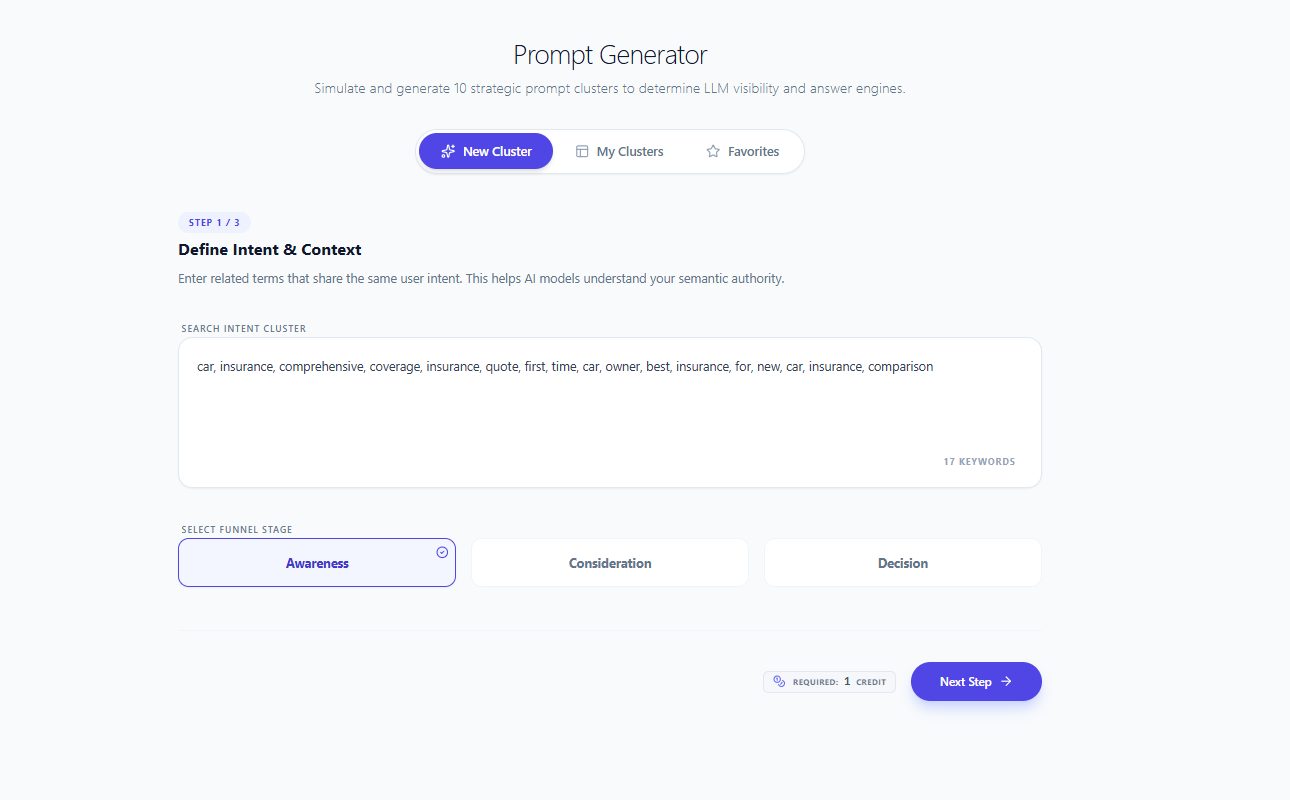 Enter your keywords and select a funnel stage
Step 2: Configure Your Persona
Different people ask AI very different questions — a first-time buyer asks differently than an industry expert. To generate prompts that accurately reflect how your real customers think, CiteVista simulates the persona behind the search. This is what makes the generated prompts realistic rather than generic: the system replicates how AI models interpret different user types.
Describe your target audience, select your industry and topic, then set four behavioral parameters:
What is Knowledge Level in AI prompt generation? Knowledge Level controls the vocabulary and depth of the generated prompts. A Novice user asks foundational questions in everyday language; an Intermediate user seeks comparisons and deeper insights; an Expert expects technical precision and industry-specific terminology.
What is Risk Tolerance in AI prompt generation? Risk Tolerance shapes whether the generated prompts lean toward established market leaders or newer alternatives. A Conservative persona prefers well-known brands with proven track records; an Adventurous persona explores niche and emerging options.
What is Decision Driver in AI prompt generation? Decision Driver defines the primary motivation behind the search. Value-Oriented prompts focus on price-performance balance; Ethics-Driven prompts prioritize sustainability and social responsibility; Premium Choice prompts reflect a preference for quality and craftsmanship.
What is Tone Preference in AI prompt generation? Tone Preference sets the voice of the simulated user. Friendly generates conversational queries; Professional produces formal, authoritative questions; Inspiring reflects emotionally driven, aspirational searches.
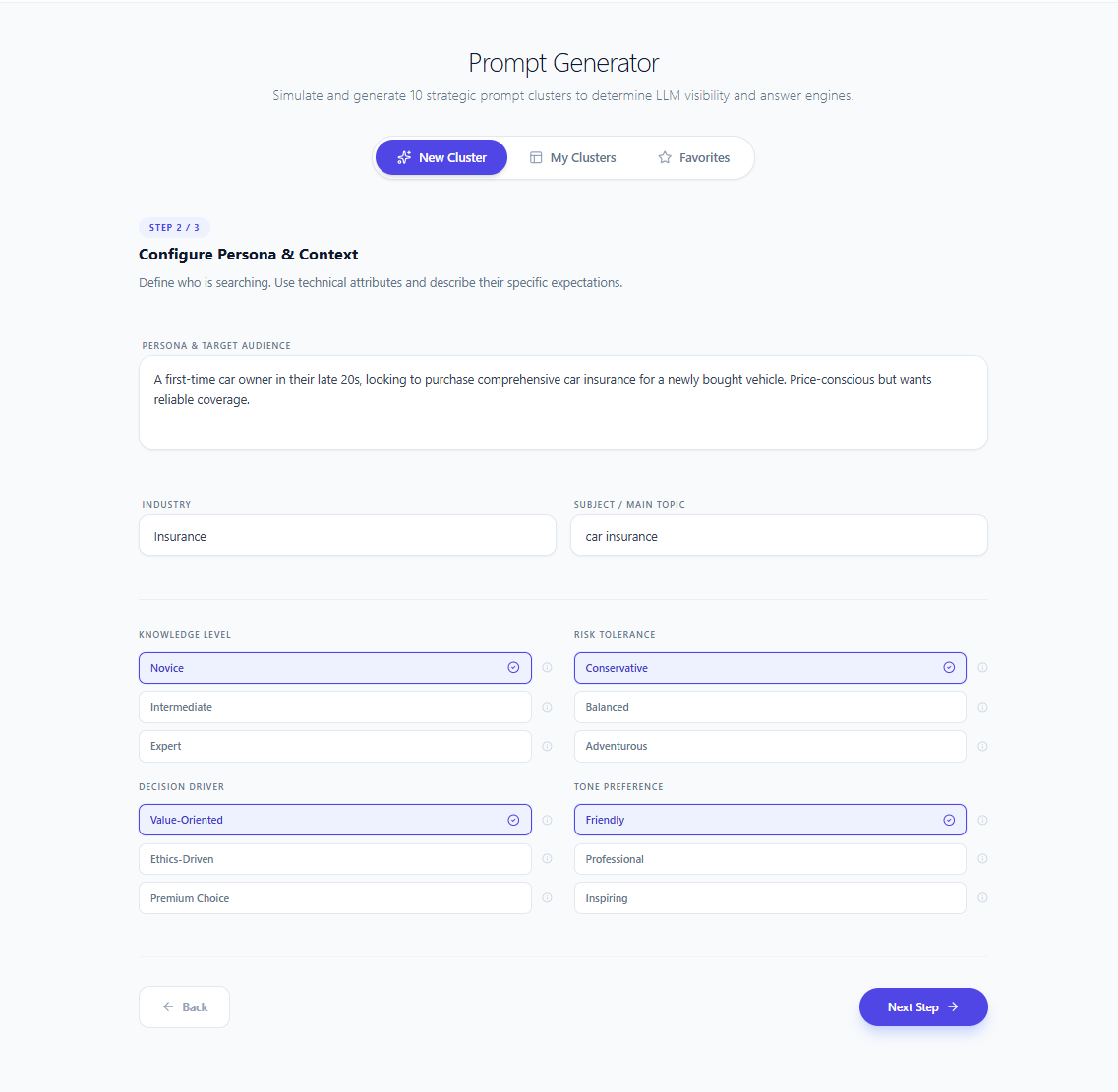 Define your target audience and configure persona parameters
Step 3: Review, Edit & Save
CiteVista generates 20 prompt suggestions based on your inputs. Select up to 10, edit any prompt to better fit your needs, or add your own manually. Save as a cluster — and use it directly across Citation Visibility Analysis, Query Intelligence, and Brand Perception Analysis to measure how your brand performs across every prompt in the set.
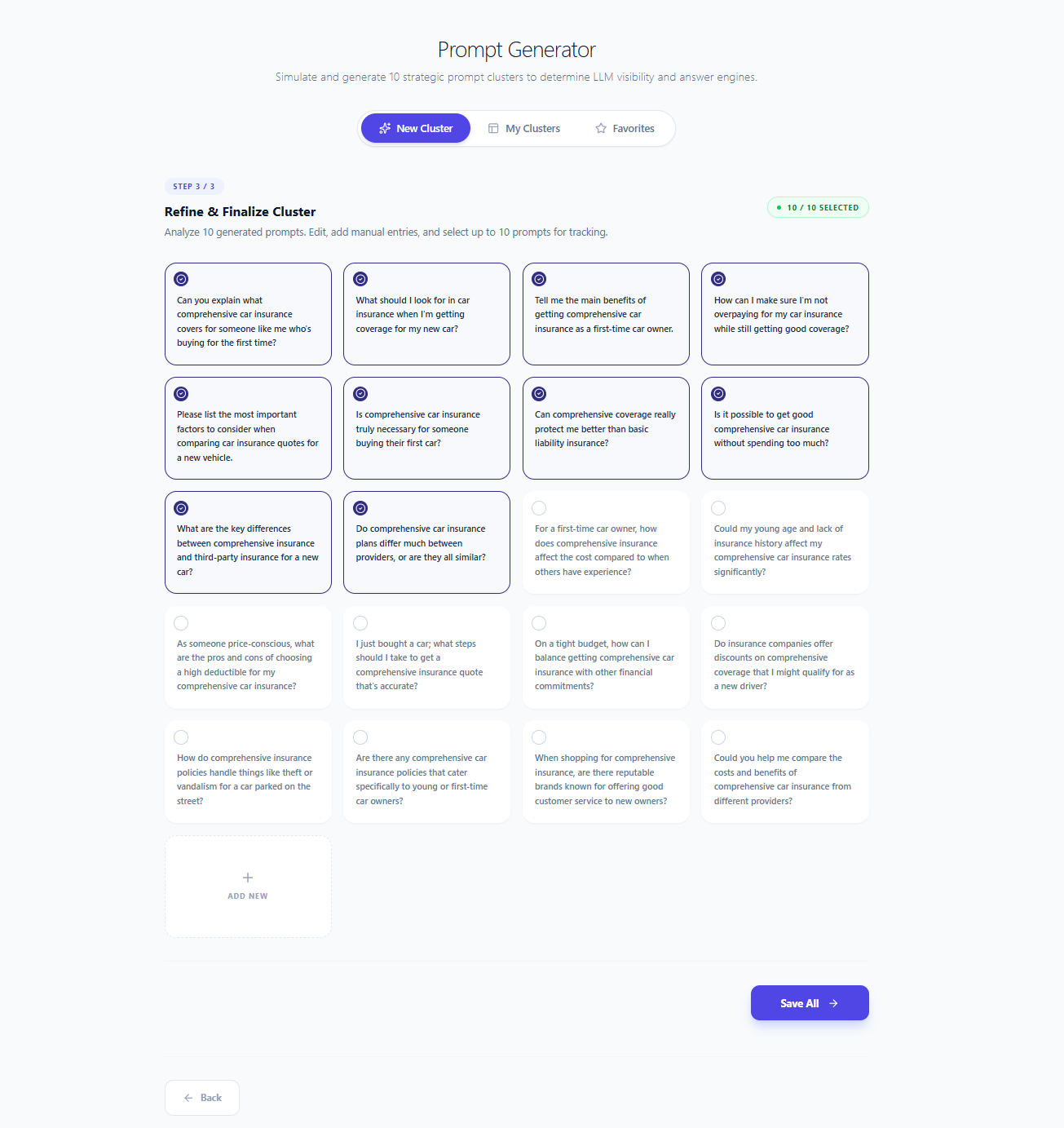 Select up to 10 prompts from the generated list, edit, or add manually